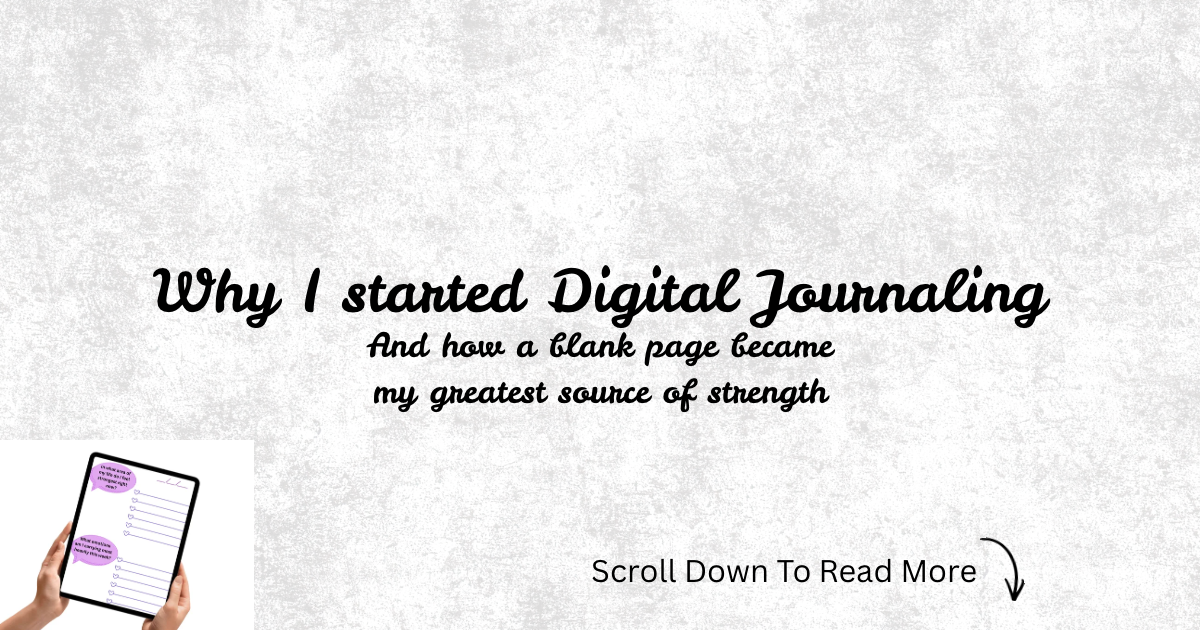
There’s a particular kind of silence that follows the end of a marriage. Not peaceful, unsettling. The kind that sits heavy in your chest and makes you questions everything you thought you knew about yourself. Five years ago, in the middle of my divorce, I was living in that silence. I was searching for clarity in a season of my life that felt like standing in the middle of a storm with no shelter in sight.
That’s when I started journaling, and it changed everything.
The Moment I Picked Up (and Put Down) a Pen
I tried traditional journaling first. A beautiful leather-bound notebook, a good pen, the whole ritual. But my thoughts were moving faster than my hand could write. I’d lose the thread halfway through a sentence, scratch things out, feel frustrated. The very tool I was using to find calm was creating more friction.
Then I opened a blank document on my laptop one night and just… started typing. No formatting. No plan. Just words pouring out of me at the speed of thought.
That was the night I discovered that digital journaling wasn’t a shortcut, it was my way in.
What Digital Journaling Actually Gave Me
- Clarity When My Mind Was Chaos
Going through a divorce means your thoughts rarely come in neat, linear order. They arrive in waves – grief, anger, relief and guilt. Sometimes all in the same hour. Digital journaling let me capture that chaos exactly as it was, then slowly begin to make sense of it.
Example: I created a running document I called “The Untangle.” Every time I felt overwhelmed, I opened it and wrote in a stream of consciousness for 10 minutes. Over weeks, I started noticing patterns. The same fears kept surfacing. The same hopes kept showing up. The document became a mirror.
2. A Space That Was Completely Mine
One of the most disorienting parts of rebuilding your life is figuring out what’s yours again- your preferences, your routines, your voice. My digital journal was a place no one else would ever read, which meant I could be ruthlessly honest. I could write things I wasn’t ready to say out loud. I could be messy and contradictory and uncertain.
That safety is powerful. It gives you room to grow into your own truth.
3. The Ability to Search and See Growth
This is where digital journaling genuinely outshines its paper counterpart. Six months into journaling, I searched the word “afraid” in my documents. The results showed me dozens of entries. But more importantly, they showed me a shift. The early entries were consumed by fear. The later ones referenced it more briefly, almost as a passing note before moving forward.
You can’t easily do that with a paper journal. But with digital, your growth becomes visible. Searchable. Undeniable.
4. Accessibility and Flexibility
Life doesn’t schedule its hard moments conveniently. Some of my most important journal entries were written on my phone at 11pm, or in the notes app in a parking lot after a difficult conversation. Digital journaling goes where you go. Your thoughts don’t have to wait until you’re home with your notebook.
How to Start Your Own Digital Journaling Practice
You don’t need to be going through something dramatic to begin. In fact, starting before life gets hard is one of the best gifts you can give yourself. Pick the best journal type the best fits you. Self-care Journal, Gratitude Journal, Affirmations Journal
Give Yourself a Low-Pressure Entry Point
You don’t have to write pages. Start with these prompts to ease in:
-What am I carrying right now that I haven’t said out loud?
-What do I want more of in my life this week?
-What am I most proud of myself for lately, even if it’s small?
Create a Ritual, Not a Routine
A routine is mechanical. A ritual feels intentional. Make your journaling time feel like something you get to do, not something you have to do. Light a candle. Make a cup of tea. Put on a specific playlist. Your brain will begin to associate those cues with openness and reflection.
Be Honest, Even When It’s Uncomfortable
The most transformative entries I’ve ever written were the ones that scared me a little. The ones where I admitted things I hadn’t even acknowledged to myself. That’s where the real clarity lives, not in the polished version of your thoughts, but in the unedited one.
Look Back Often
Set a mobile reminder to re-read entries from a few weeks ago. This is where journaling compounds. You’ll catch yourself thinking I’ve grown so much since then more often than you expect, and that realization is quietly, profoundly empowering.
Five Years Later
I still journal digitally, though what I write about has transformed completely. I’m not untangling grief anymore, I’m building something. Planning, dreaming, processing joy just as carefully as I once processed pain.
The version of me who first typed into that blank document on a hard night five years ago couldn’t have imagined where she’d land. But in a way, that journal helped get her here. Word by word, entry by entry, she wrote herself into someone she was proud to become.
You have the same power. A blank page is not intimidating, it’s an invitation. To show up for yourself, to be honest and to figure out in real time who you’re becoming.

Start today even if it’s just one sentence, that’s how it begins.
Have you tried digital journaling? I’d love to hear your experience, drop a comment below or reach out directly.
Subscribe to rebuilding-after-divorce.com email list






Leave a Reply